
Journey 1860
The Lutheran Mission to Liberia
Our upcoming documentary project explores the deep historical connection between the United States and Liberia, focusing on the legacy of Lutheran missionaries who helped shape early education, faith communities, and social institutions in the region.
We envision a world where stories connect people across borders, where service creates healing, and where every generation is empowered to learn from the past while building a better future.
We are telling a story of legacy through a 30-month labor of love...
Deep Research
Feature one
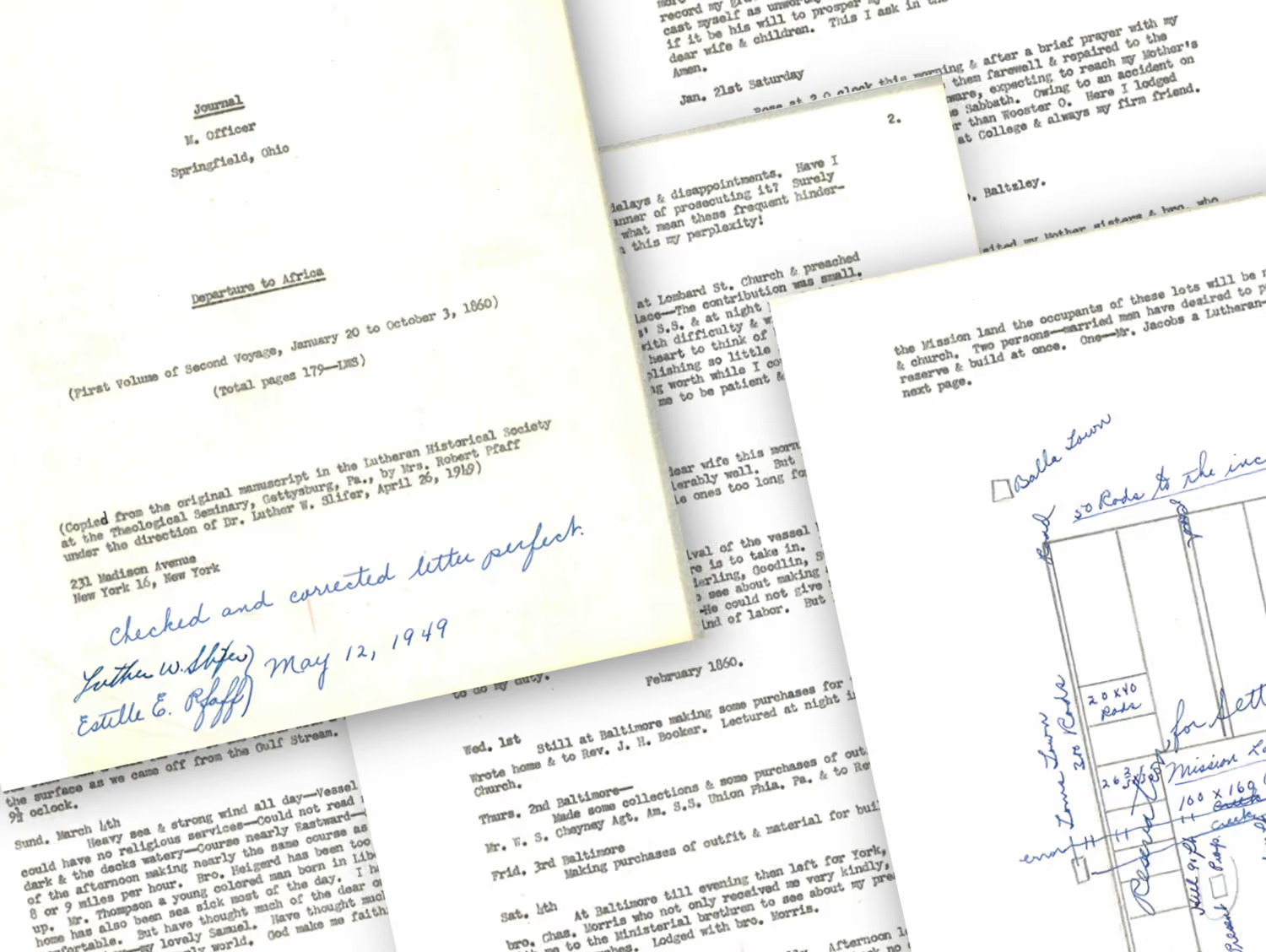
Access to deep archival research
Including the diary of Rev. Morris Officer, official historical Lutheran church documentation, and more, we are conducting deep archival research. This information has been invaluable in providing such context to the conversations we are having.
Expert Support
Feature two
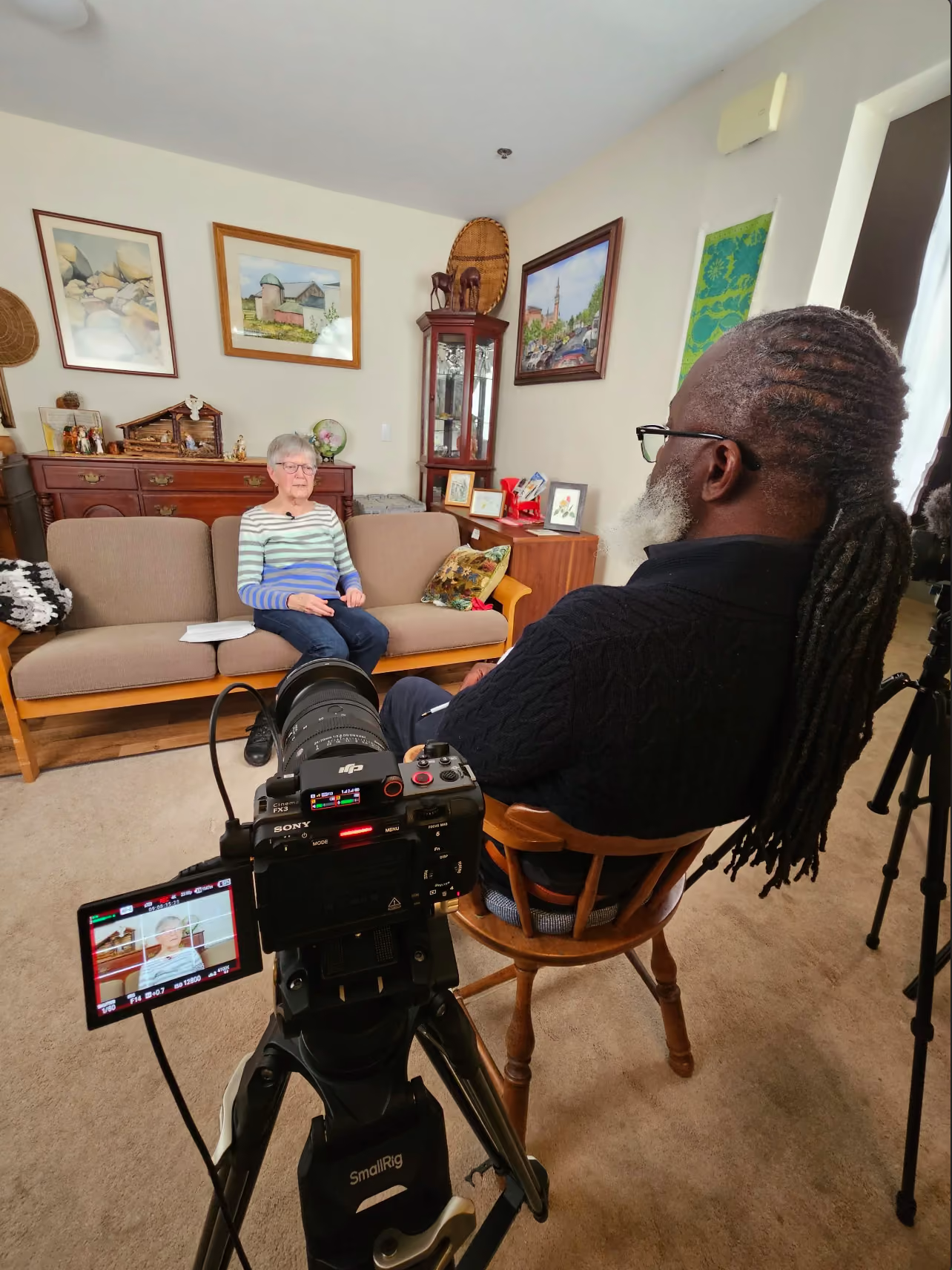
Interviewing historians and scholars
We are speaking with historians and scholars spanning culture, traditions, and geography. We value diversity in sources of research. Speaking with historians and scholars supports the archival research, and personal stories bring emotion and highlight the impact.
Clergy & Community
Feature three
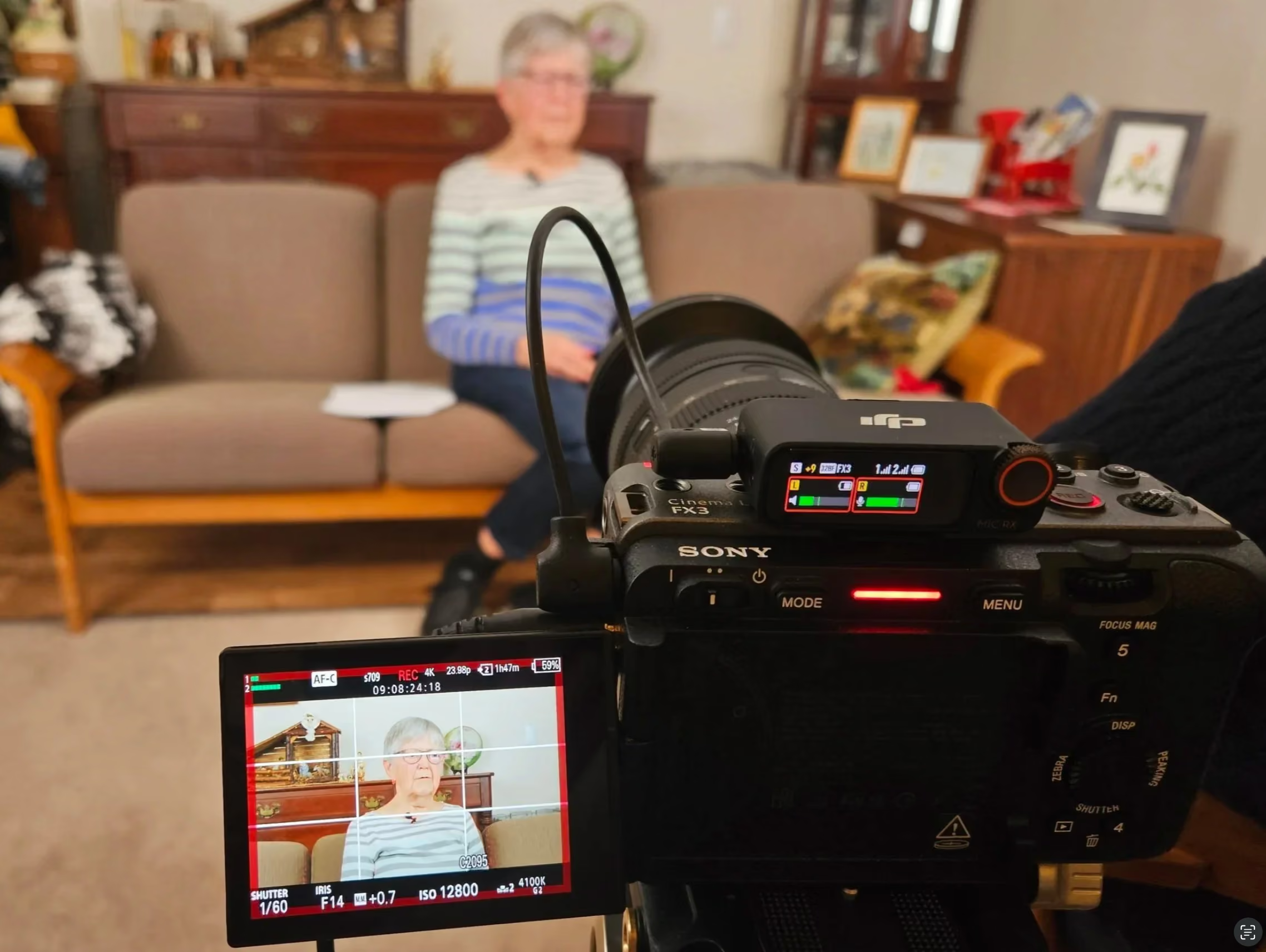
Engaging with church leadership and communities
With official historical records from the ELCA, we are able to get in touch with church leadership and congregations who had connections to the mission in Liberia. We are also speaking with communities of faith to spread the word.
Real-Life Stories
Feature four
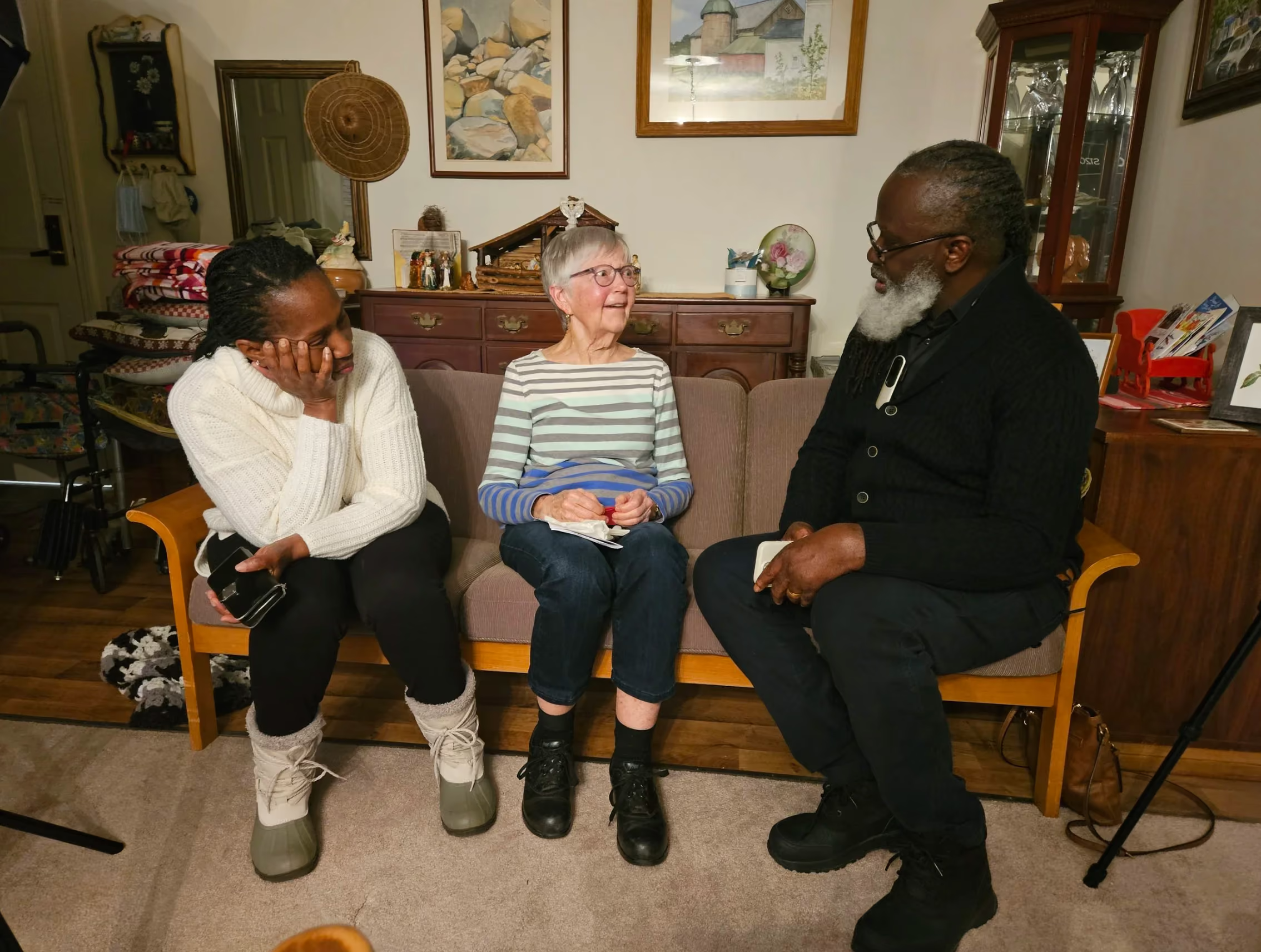
On-location filming and personal accounts
We are sitting down with real people. We are hearing personal accounts and deep emotional insight on the impact of the Lutheran mission. These conversations aren't simply calls. We are traveling. We are going on location to visit key characters and settings to help us tell a truly authentic story.
Why start with a documentary?
This documentary project explores the deep historical connection between the United States and Liberia, focusing on the legacy of Lutheran missionaries who helped shape early education, faith communities, and social institutions in the region.
Through interviews with historians, scholars, clergy, and community leaders—alongside archival research and on-location filming in both the United States and Liberia—this film will preserve stories that are at risk of being lost.
This project is more than a documentary. It is:
- A historical preservation effort capturing untold narratives
- An educational resource for schools, churches, and institutions
- A memorial honoring those who dedicated their lives to service
With a 30-month production timeline, the film represents a major step forward in our mission to connect history, community, and purpose.


Building Bridges
Mentorship & connection
At its heart, This Village Now is about building bridges—bridges between people, generations, cultures, communities, and stories that might otherwise be lost.
The Christian faith itself has always traveled across bridges. Someone carries the Gospel from one place to another, one generation to another, one life to another. And very often, those who build the bridge never get to see everyone who will eventually cross it.
That is certainly true of the relationship between Liberia and the missionaries who answered God’s call to serve there. Men and women left familiar places and crossed oceans, cultures, languages, and enormous uncertainties because they believed God was calling them to go. Liberians received that witness and, in turn, became pastors, evangelists, teachers, leaders, and missionaries themselves. What began as one person’s willingness to serve became part of a much larger story.
Our father, Mulbah Jackson, was part of that story. His encounter with the Christian faith was shaped by missionaries who had answered God’s call before he did. He eventually became a Lutheran pastor himself, serving God’s people in Liberia until his death during the civil war. Today, his children and many others continue to carry pieces of that legacy in ways neither he nor those early missionaries could have fully imagined.
This is what makes a bridge so powerful: you do not have to see where it ultimately leads in order to begin building it.
This Village Now seeks to build those bridges again—not by romanticizing the past or pretending that every part of our shared history was simple, but by preserving stories, listening carefully, honoring sacrifice, learning from one another, and creating relationships that can shape the future.
We want to connect Liberia with friends around the world; younger generations with the stories of those who came before them; churches with communities; memory with mission; and gratitude for yesterday with responsibility for tomorrow.
Because perhaps the most important question a bridge asks is not simply, Where have we been?
It is: Where might we go together from here?

liberian coffee
funding efforts
The Liberian coffee trade began to develop in the 19th century, when coffee cultivation was introduced and expanded along Liberia’s fertile coastal and inland regions. Liberia’s tropical climate and rich soils provided favorable conditions for growing coffee, particularly Liberica coffee, a species that became closely associated with the country.
During the late 19th and early 20th centuries, coffee became an important cash crop for Liberian farmers and a product for international trade.
In the near future, we envision developing an authentic Liberian coffee to sell and support the organization’s efforts.

futurise soccer
empowering youth
Futurise Soccer Venture is a pioneering youth development initiative designed to bridge athletic excellence with global cultural exchange. Founded by Dr. Igdaliah Jackson and former professional soccer player and long time front office executive Mike Conway.
By providing structured, high-quality soccer training to youth aged 3 to 20, Futurise aims to nurture the next generation of athletic talent while fostering a deeply inclusive community. Distinct from traditional local academies, Futurise integrates international collaboration into its core model, offering participants unique opportunities to engage with and learn from diverse global football cultures.
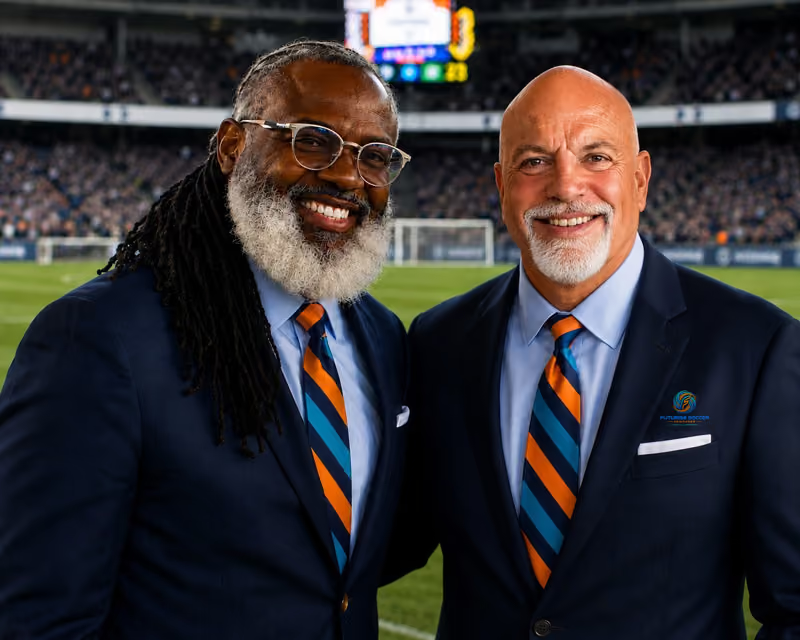
The Mission
To empower boys and girls of all backgrounds through world-class soccer instruction, cultivating foundational athletic skills, personal leadership, and a lifelong passion for the game, while actively uniting diverse communities through the universal language of sport.
The vision
To become a globally recognized hub for holistic youth development, where sport serves as a catalyst for breaking cultural barriers, inspiring international collaboration, and shaping well-rounded global citizens both on and off the pitch."

establishing a memorial
our ultimate goal
We seek to memorialize American missionaries. This begins with Rev. Officer and the nearly 400 who followed in his path over the centuries. Most of these missionaries stayed for a considerable length of time and some lost their lives for the mission and the cause.
Not only do we believe their stories are worth telling, we believe their legacy is worth honoring and remembering. See the Global Mission of the ELCA and its Predecessors below.
we welcome your support
From charitable support and passionate volunteers to strategic partnerships and founding donors, every contribution matters. Your support helps turn our vision into reality.